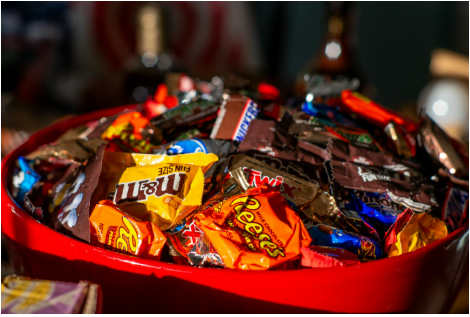
By November 1st, most houses have a bowl of leftover candy on the counter. Somebody grabs a handful on the way to the car. Somebody else works through the sour gummies during a late night of emails. Nobody is counting.
Any dentist in Garner, NC can tell you that a bowl like that leaves a mark, and it tends to show up at the next cleaning. The good news is that the damage depends far more on what kind of candy it is, and how you eat it, than on whether you eat it at all.
So here is the full ranking. Worst first.
What is the worst Halloween candy for your teeth?
Sour candy is the worst Halloween candy for your teeth, because it hits enamel with acid and sugar at the same time.
The American Dental Association puts it plainly: sour candies are high in dietary acids that attack the hard, protective coating on your teeth. That coating is enamel, and once acid softens it and it wears away, your body does not grow it back.
Sour gummies are the double offender. They are acidic, they are sugary, and they are sticky, so the acid has something to hold it against your teeth. Sour sprays, powders, and sour coated straws land in the same category.
If sour candy is your weakness, do not brush right after eating it. Enamel is softer for a while after an acid hit, and scrubbing it immediately can do more harm. Rinse with water, then brush later.
Why are sticky and chewy candies so hard on teeth?
Sticky candy stays on your teeth long after you have swallowed, which gives cavity-causing bacteria hours of sugar to feed on.
Caramels, taffy, gummy worms, and fruit chews press right into the grooves of your back teeth. Those grooves are a favorite spot for cavities to start. Your tongue cannot clear them out, and saliva needs a long time to wash them away.
Chewy candy also has a habit of pulling things loose. Caramel and taffy are well-known for tugging out fillings and loosening crowns, especially older ones. If you have dental work, chew carefully or skip these.
Are hard candies and lollipops really that bad?
Hard candies rank high on the list because you keep them in your mouth for a long time. Fifteen minutes with a jawbreaker is fifteen minutes of your teeth sitting in sugar.
The ADA recommends avoiding hard candy and sticky sweets that stay in your mouth for a long time, and the reason is that exposure time matters more than the amount of sugar. One small lollipop savored over a car ride can do more harm than a full-size candy bar eaten in two minutes.
Then there is the crunch. Biting down on a hard candy is a common way to crack a tooth. A crack can start small and painless, then turn into a much bigger problem months later.
Which Halloween candy is least bad for your teeth?
Plain chocolate is the least bad Halloween candy for your teeth. According to the ADA, chocolate does not stick to your teeth as readily as other candies, so it clears away faster.
Dark chocolate is even better, since it usually has less sugar. Chocolate bars loaded with caramel or nougat lose some of that advantage, so a plain chocolate square beats a caramel-filled bar.
And one candy aisle option actually helps. Sugar-free gum. The ADA notes that chewing sugarless gum for 20 minutes after eating helps prevent tooth decay, because chewing gets your saliva flowing and saliva neutralizes acid.
Here is the full ranking in one place, from worst to least bad:
- Sour gummies and sour candies
- Caramels, taffy, and other chewy candy
- Hard candy, lollipops, and jawbreakers
- Chocolate bars with caramel or nougat
- Plain milk or dark chocolate
- Sugar-free gum, which can actually help
How can you enjoy Halloween candy without damaging your teeth?
The simplest move is to eat candy with a meal, or right after one, instead of grazing on it all afternoon.
Your mouth makes more saliva during a meal, and that extra saliva helps wash away sugar and acid. Grazing does the opposite. Every piece restarts the acid attack, so ten pieces spread across a day is far harder on your teeth than ten pieces after dinner.
A few other habits help:
- Drink water after candy to rinse sugar off your teeth
- Pick one or two favorites and let the rest of the bowl go
- Chew sugar-free gum after a treat
- Brush twice a day and floss once, especially in November
It also helps to keep up with your regular visits. A small cavity caught early is a quick, inexpensive filling. The same cavity left alone through the holidays can turn into a crown or a root canal, and that is a very different bill.
If you are looking for an affordable dentist in Garner, NC for your family, New Hope Dental Care sees children, adults, and seniors, offers early and late appointments, and accepts CareCredit. Many dental plans also reset in January, so a fall cleaning is a good way to use benefits you have already paid for.
Leftover candy on the counter? Request an appointment with New Hope Dental Care and we can check how your teeth came through the season.